The Realignment
Venezuela News — Shell Lands a Major Venezuelan Gas Field
The reopening stopped being a thesis this week and started being paperwork. Shell signed five agreements with Caracas, including a license for the long-dormant Loran gas field; Schlumberger, the world's largest oilfield-services company, put its name on a technology memorandum with PDVSA; and Treasury quietly rewrote the one clause that had been holding up production contracts, dropping its insistence that every deal be governed solely by U.S. law. And a U.S. strike that killed a Tren de Aragua boss in the gold-mining south reopened a much older question about who actually controls the country's mineral wealth.
Top Stories
Treasury loosens the governing-law rule that stalled PDVSA contract talks. OFAC amended its Venezuela licenses on June 10, dropping the requirement that contracts be governed exclusively by U.S. law and now allowing clauses that also recognize certain aspects of Venezuelan regulation. U.S. law still governs interpretation, payment obligations, and enforceability, while Venezuela's sovereign regulatory authority, permits, and labor and environmental rules are now permitted. Treasury also widened dispute-resolution venues to include the United Kingdom, France, and Singapore, and extended the changes to gas, petrochemicals, mining, and electricity deals with state entities. Bloomberg
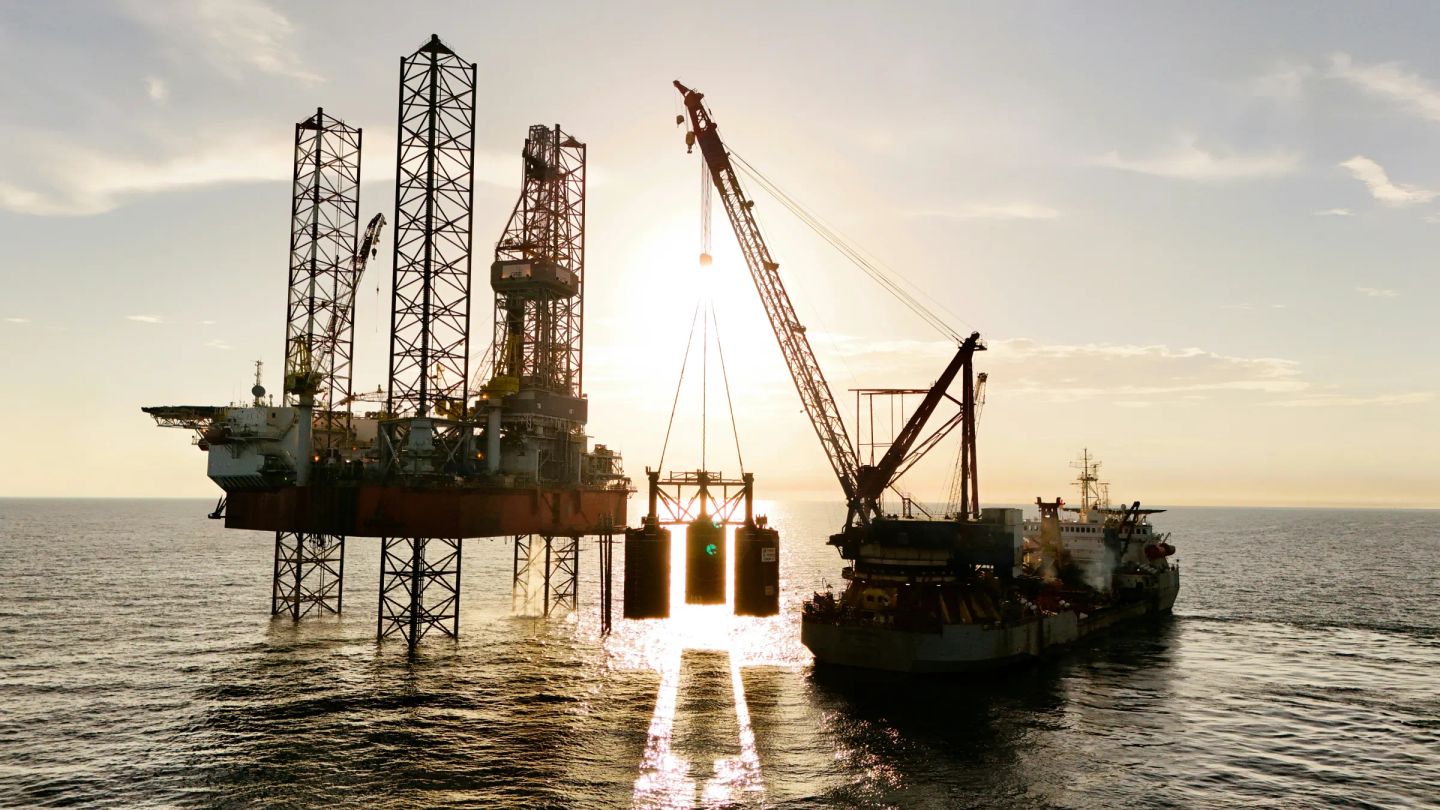
Venezuela handed Shell a first-phase license for Loran, a 7-trillion-cubic-foot offshore gas field that has been inactive for 23 years. Venezuela signed five agreements with Shell in a ceremony led by Acting President Delcy Rodríguez, headlined by a first-phase license for the Loran gas field, which had been inactive for 23 years. Loran holds an estimated seven trillion cubic feet of gas across seven reservoirs, six of them transboundary with Trinidad and Tobago. Four of the instruments stem from the technical-financial alliance Shell and PDVSA formed in March, alongside agreements for the Carito and Pirital units in Monagas. It is the most concrete commitment yet from a Western major on Venezuelan gas, and Caracas is framing it as a step toward becoming a gas exporter. Reuters
A U.S. strike kills a Tren de Aragua boss in the gold-mining south. President Trump announced on June 12 that U.S. Southern Command, working with Venezuela, had killed Tren de Aragua leader Héctor Guerrero Flores ("Niño Guerrero") in a "kinetic strike" in the gold-mining southeast of Bolívar state. The operation around Las Claritas and Kilómetro 88 began June 9, after people described as U.S. investors had toured gold mines and state processing facilities in El Callao. The zone sits atop two of the continent's largest gold deposits, Las Brisas de Cuyuní and Las Cristinas, both expropriated under Chávez and since controlled by armed "sindicatos." Bloomberg
Energy Sector
Oilfield-services giant, Schlumberger, signs a technology memorandum with PDVSA. Acting President Delcy Rodriguez hosted Schlumberger Chief Executive Officer Olivier Le Peuch at Miraflores to sign a memorandum of understanding covering oil and gas technology. The deal frames cooperation on exploration, drilling, and reservoir optimization, the engineering capacity that is a binding constraint on any Venezuelan output recovery. Alnavio
Shell and PDVSA executives walk the Muscar complex in Monagas. PDVSA President Hector Obregon and Shell Exploration and Production head Peter Costello toured the Muscar Operative Complex in Monagas state, where the partners plan work to expand production capacity and shore up gas-handling infrastructure at the Carito and Pirital fields. Those fields feed domestic industry and power generation, so the visit is as much about grid reliability as about export barrels. It lands alongside the wider Shell agreement package signed the same week. Banca y Negocios
Venezuela's oil story is now about reviving production, not its massive reserves. With proven reserves of roughly 303 billion barrels, production stuck near 1 to 1.1 million barrels per day and exports edging up to about 1.25 million, Venezuela is increasingly valued on the timing of recovery rather than the size of the resource. Industry estimates suggest restoring output above 2 million b/d would require $50 to $100 billion-plus in phased investment. Chevron remains the most embedded Western operator at an estimated 250,000 to 300,000 b/d, while ExxonMobil weighs a return to legacy Orinoco assets such as Cerro Negro. Venezuela Energy Week
Deal Flow
Argentina's Impsa signs on to rebuild Venezuela's hydro capacity. Impsa agreed to work on Venezuela's power grid and is moving to renegotiate a decade-old contract to finish the stalled Tocoma dam and rehabilitate Macagua, work that could add 672 megawatts. The plan is to repair three 80-megawatt turbines at Macagua and install two 216-megawatt units at Tocoma, enabled by a recent U.S. license permitting the export and installation of the hydroelectric equipment. The original Corpoelec contract had been frozen for years by financial disputes and sanctions. Reuters
Opinion
Why Wall Street and China share the same Venezuela problem. Caracas Chronicles argues that the central obstacle to reconstruction is not sanctions or oil prices but the counterparty: an extraction network, personified by sanctioned and SDNY-indicted Interior Minister Diosdado Cabello, that spent two decades optimizing for value extraction over asset performance. The piece notes China stopped issuing new Venezuelan loans back in 2016, a credit-committee decision as much as a political one, and holds up Delaware-incorporated CITGO as the one asset that survived precisely because its governance sat outside Venezuelan jurisdiction. The implied warning for U.S. capital: arrive with a governance structure the network cannot penetrate, or repeat the cycle with better letterhead. Caracas Chronicles
About Interstice Digital
The Interstice Digital Venezuela Protocol is a cross-border payment compliance infrastructure system purpose-built for the Venezuela corridor, that works by routing US dollar payments from the United States to Venezuela using USDC or USDT stablecoins, through a process nearly as simple as an international bank wire. Interstice Digital is a U.S.-based digital asset infrastructure company building compliant payment and settlement solutions for institutional participants.
For more information, visit intersticedigital.io.
Disclaimer
The Venezuela-America Weekly News Roundup is an aggregation of publicly available news, commentary, and third-party reporting. All items should be independently verified before being relied upon for business, legal, investment, or compliance decisions. Nothing in this newsletter represents the views, opinions, or positions of Interstice Digital or its affiliates. Interstice Digital is not a bank, broker-dealer, investment adviser, or payment network. This newsletter does not constitute legal, financial, regulatory, or investment advice. Links to third-party sources are provided for informational purposes only; Interstice Digital has no responsibility for the accuracy or completeness of third-party content.