The Reality
Venezuela News — Earthquakes Hit Venezuela, Here’s How to Help
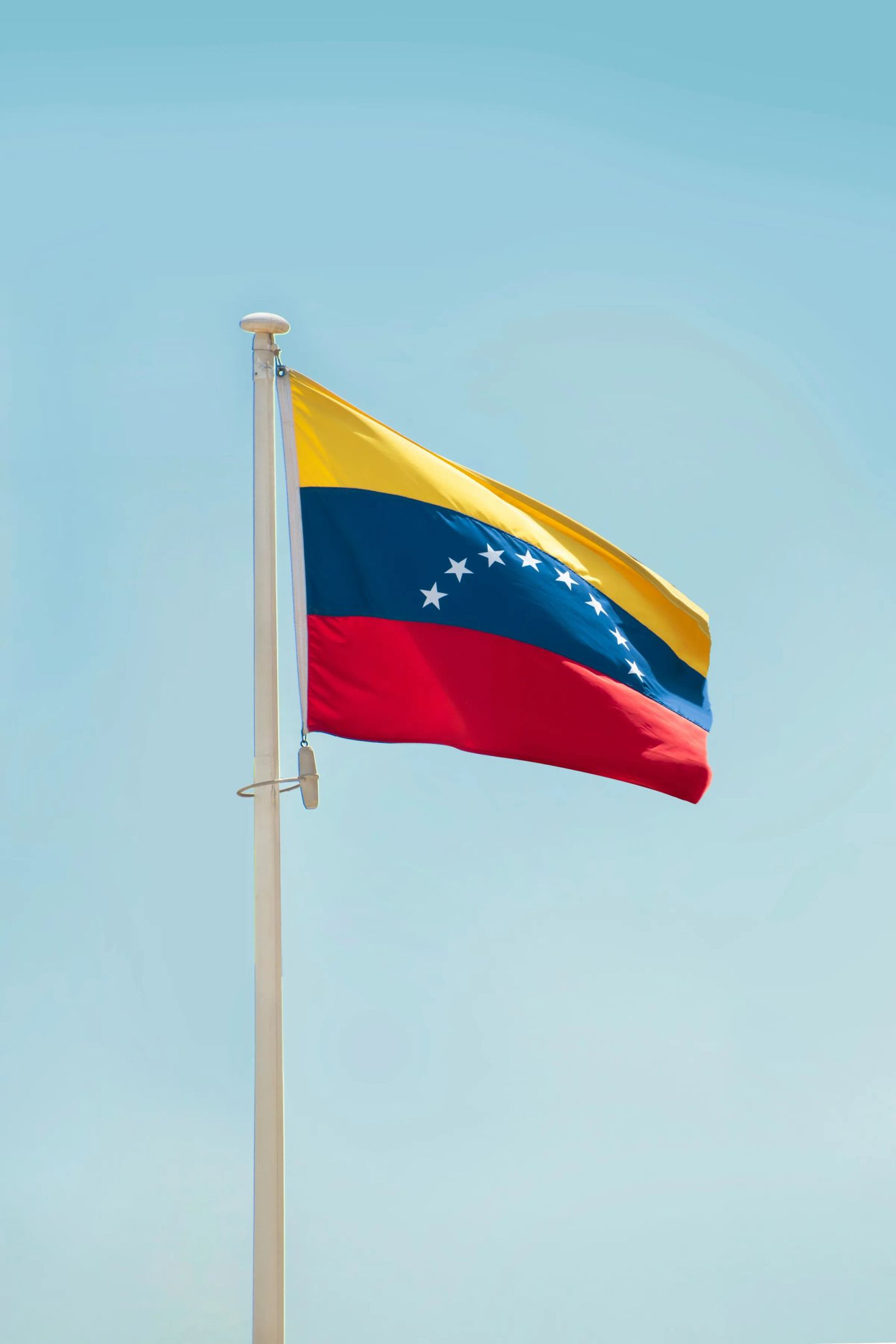
Two powerful earthquakes struck north-central Venezuela on June 24, with Caracas and La Guaira being the most affected, in the country's worst natural disaster in decades. We begin with the relief effort, highlighting vetted organizations accepting aid, then cover the latest developments in Washington, including a $150 million U.S. aid package and a new Treasury authorization that allows humanitarian transactions to proceed. But the corridor kept moving on other fronts: Venezuela is preparing to disclose a record $240 billion in debt ahead of what would be the largest sovereign restructuring on record, India's ONGC is pressing for greater control of two oilfields, and grid strain knocked the country's largest refinery offline even as crude oil exports climbed to their highest level since 2019.
Top Stories
Vetted channels to support Venezuela earthquake relief. Several established humanitarian organizations are accepting donations for the June 24 earthquakes, each routing contributions to teams already working inside the country:
- International Federation of Red Cross and Red Crescent Societies (IFRC) — launched an emergency appeal for 50 million Swiss francs (about $61 million) to support the Venezuelan Red Cross in reaching 300,000 people, and has already dispatched its first 17 tonnes of relief cargo.
- World Central Kitchen — Chef Jose Andres' organization has deployed teams in Caracas serving hot meals to survivors and rescue workers.
- Catholic Relief Services — responding through its partner Caritas Venezuela with food, water, and shelter.
- UNICEF USA — funding emergency support for children and families affected by the disaster.
U.S. commits $150 million in coordinated federal response to the Venezuela earthquakes
The State Department announced a $150 million relief package, with $100 million directed to a UN humanitarian fund for Venezuela and $50 million to aid groups already operating in the country, including faith-based organizations such as Samaritan's Purse and Catholic Relief Services. Washington deployed a Disaster Assistance Response Team of more than 250 people, alongside three urban search-and-rescue teams from Fairfax County (Virginia), Los Angeles County (California), and Miami-Dade County (Florida). U.S. Southern Command surged naval and air assets, including the USS Fort Lauderdale and the USS Billings plus C-17 and C-130 transport aircraft, with Marine Corps Major General Kevin Jarrard sent to Venezuela to coordinate. Secretary of State Marco Rubio described the effort as a whole-of-government response that would be "big, fast, and effective." U.S. Department of State
Venezuela's debt could reach $240 billion, setting up the largest sovereign restructuring on record. Venezuela is preparing to acknowledge a total debt load of nearly $240 billion, well above the $150 billion to $200 billion the market had assumed, the Financial Times reported. That figure would make it the biggest sovereign restructuring in history, surpassing Greece's 2012 default. Centerview Partners, the U.S. advisory firm Caracas hired, is finishing a debt-sustainability plan due in early July, and the government has set a goal of reaching a deal with creditors before year-end. Most analysts doubt a deal closes in 2026, with attention shifting toward 2027. Financial Times
OFAC issues General License 60, clearing earthquake-relief transactions through October 23. On June 25, the Treasury's Office of Foreign Assets Control (OFAC) issued General License 60, authorizing transactions tied to earthquake-relief efforts in Venezuela that would otherwise be barred under the Venezuela Sanctions Regulations. The authorization lets U.S. persons, banks, and relief organizations move humanitarian funds and goods without applying for separate licenses. It runs through 12:01 a.m. Eastern on October 23, 2026. The carve-out removes a compliance obstacle that aid groups and their financial partners would otherwise face when channeling support into the country. OFAC
Politics
Opposition leader Maria Corina Machado pushes to return to Venezuela after the quakes. Opposition leader Maria Corina Machado is working to return to Venezuela as soon as possible, a move that could reshape the political landscape while acting President Delcy Rodriguez manages the disaster response. Machado tried to reach the country through Curacao last week with private security but called off the attempt after the Trump administration made clear she would be traveling at her own risk, without U.S. backing. Senior U.S. officials are frustrated by her renewed push for help to return, with two administration officials calling the timing ill-advised. Allies say she has held back, in part to avoid politicizing the tragedy. Bloomberg
Energy Sector
A blackout forces Amuay, Venezuela's largest refinery, offline as the grid strains after the quakes. A power outage on Sunday shut down the 645,000-barrel-per-day Amuay refinery, workers told Reuters, leaving it the second refinery without electricity since the earthquakes. Amuay, central to fuel supply for the domestic market, had been processing about 137,000 barrels per day of crude before the quakes. Insufficient water for some power plants and industries in western Falcon state, including the refinery, is compounding the strain. Venezuela has struggled to restore power to plants, refineries, businesses, and homes since June 24. Reuters
Venezuela's Moron petrochemical complex restarts after a precautionary quake shutdown. The Moron petrochemical complex, one of the country's largest, began restarting after a preventive shutdown prompted by the earthquakes, the area's fire chief said. Workers had been kept home while crews assessed damage, and a leak from a storage tank detected on the day of the quakes was contained. Industry assessments found Venezuela's oil and petrochemical infrastructure largely intact, with grid stability, rather than structural damage, the main near-term risk to output. The restart is an early sign that the corridor's energy backbone weathered the disaster. Reuters
Venezuela's oil exports rose to 1.25 million barrels per day in May. In data reported just before the earthquakes, Venezuela's crude exports rose to 1.25 million barrels per day in May, a third straight monthly increase and the highest level in seven years. The United States was the top destination at 558,000 barrels per day, followed by India at 427,000 and Europe at 169,000, as eased U.S. sanctions and expanded foreign projects lifted volumes. The oil ministry has forecast output of 1.37 million barrels per day by year-end. The figures frame the stakes of keeping refineries and the grid stable as the country recovers. OilPrice
Deal Flow
India's ONGC seeks a bigger stake and operating control in two Venezuelan oilfields, pending a U.S. license. India's state-run ONGC, through its overseas arm ONGC Videsh, is in talks with PDVSA to expand its position and take operational control of the San Cristobal and Carabobo-1 fields. ONGC Videsh already holds 40 percent of San Cristobal and 11 percent of Carabobo-1, and is pushing for an operator role to reverse production declines and recover more than $500 million in dividends trapped in the country. The plan would lift output at the sites from roughly 12,000 to 15,000 barrels per day today to about 30,000 within a year, and eventually 50,000. The deal hinges on securing a U.S. license, which ONGC is actively pursuing in Washington. The Economic Times
Opinion
A multinational relief operation converges on Venezuela. The international response grew into one of the largest coordinated relief operations the region has seen in years. The UN reported that dozens of international search-and-rescue teams from more than two dozen countries deployed at Caracas' request, joined by field hospitals and medical personnel from across the Americas and Europe. Civil society moved in parallel: neighbors, architects, doctors, and volunteers organized through messaging apps to clear rubble, inspect damaged buildings, and move food, water, and medicine to the hardest-hit areas. Private companies pitched in as well, restoring connectivity and waiving fees for those affected. UN News
About Interstice Digital
The Interstice Digital Venezuela Protocol is a cross-border payment compliance infrastructure system purpose-built for the Venezuela corridor, that works by routing US dollar payments from the United States to Venezuela using USDC or USDT stablecoins, through a process nearly as simple as an international bank wire. Interstice Digital is a U.S.-based digital asset infrastructure company building compliant payment and settlement solutions for institutional participants.
For more information, visit intersticedigital.io.
Disclaimer
The Venezuela-America Weekly News Roundup is an aggregation of publicly available news, commentary, and third-party reporting. All items should be independently verified before being relied upon for business, legal, investment, or compliance decisions. Nothing in this newsletter represents the views, opinions, or positions of Interstice Digital or its affiliates. Interstice Digital is not a bank, broker-dealer, investment adviser, or payment network. This newsletter does not constitute legal, financial, regulatory, or investment advice. Links to third-party sources are provided for informational purposes only; Interstice Digital has no responsibility for the accuracy or completeness of third-party content.