The Opening
Venezuela News — Venezuela ends PDVSA's oil monopoly
Venezuela retired its 1943 oil rulebook this week, and the replacement never once mentions PDVSA. Acting President Delcy Rodríguez signed regulations that open exploration, production, refining, marketing, and distribution to private operators, and the first companies through the door are small independent oil producers moving faster than Big Oil. Washington, meanwhile, is turning its earthquake response into infrastructure: U.S. aid has passed $386 million and now runs on a weekly Miami-to-Caracas air bridge flown with Amazon and Airlink. Underneath it all, Caracas is preparing to acknowledge close to $240 billion in debt in what would be the largest sovereign restructuring on record. It is a week about who gets to come in, and on what terms.
Top Stories
Venezuela ends PDVSA's oil monopoly with its first industry rulebook since 1943. Acting President Delcy Rodríguez signed regulations, published in the Official Gazette on July 9, that open Venezuela's oil industry to private companies across exploration, production, refining, marketing, and distribution. The 29-page decree is the country's first comprehensive petroleum framework since 1943, and it never once names Petróleos de Venezuela (PDVSA), the state company that controlled the sector for decades. Fiscal terms are tiered by asset risk, running from 20 percent on undeveloped fields to 35 percent on producing ones, with extra-heavy crude at 25 percent and reductions of up to 5 points for offshore and refining projects. PDVSA had already handed operational control of production to Chevron and other operators starting in 2022; the new rules extend that opening downstream for the first time. The reform is tied to the U.S.-backed interim administration and the gradual unwinding of American sanctions. World Oil
USDT does the work Venezuela's banks can't as the stablecoin tops 800 bolívares. Demand for Tether's USDT stablecoin surged again this week, with the token trading above 800 bolívares on Binance's peer-to-peer market as annual inflation runs past 200 percent. USDT-VES pairs now account for roughly 90 percent of Venezuelan peer-to-peer listings, and by some estimates about 85 percent of everyday transactions in the country already move in the dollar-pegged token. The money supply has more than doubled since January, widening the gap between the bolívares in circulation and the hard currency Venezuelans want to hold. For a country whose banking system still works in fits and starts, the stablecoin has become the default savings and payment rail. It is also the rail U.S. compliance questions increasingly run through as the corridor formalizes. BeInCrypto
Bolivia weighs putting Tether's USDT inside its national payment system. Bolivia is studying whether to let Tether's USDT, the largest dollar-pegged stablecoin, circulate through its national payment system alongside the boliviano and the U.S. dollar, Economy Minister José Gabriel Espinoza said on July 13. The government is drafting a framework for banks, digital wallets, and payment providers, though it has published no rules yet and is not granting USDT legal-tender status. The move responds to a severe shortage of physical dollars after Bolivia dropped its 15-year currency peg earlier this year and let the boliviano float. Crypto transaction volumes have surged since the country lifted restrictions in 2024, reaching about $430 million in the year that followed. Bolivia still sits on the Financial Action Task Force grey list, so it must tighten anti-money-laundering controls before any official adoption. CoinDesk
U.S. aid tops $386 million as Washington builds an air bridge and parks Navy ships offshore. The United States has committed more than $386 million in earthquake assistance, the State Department said in a July 8 update, and it is building the logistics to keep it flowing. A new humanitarian air bridge runs weekly from Miami to Maiquetía at no cost, with Amazon providing the transport, the nonprofit Airlink handling logistics and vetting, and a World Food Program-led team distributing supplies on the ground. The USS Fort Lauderdale is positioned off La Guaira, a Navy team is assessing damaged ports, and U.S. Southern Command helped restore the runway at Simón Bolívar International Airport. State Department warehouses have moved more than 400 metric tons of shelter, hygiene, and kitchen supplies, reaching an estimated 70,000 people. The release stressed a long-term commitment, promising that “America won't leave when the news cameras do.” U.S. Department of State
Oil & Gas
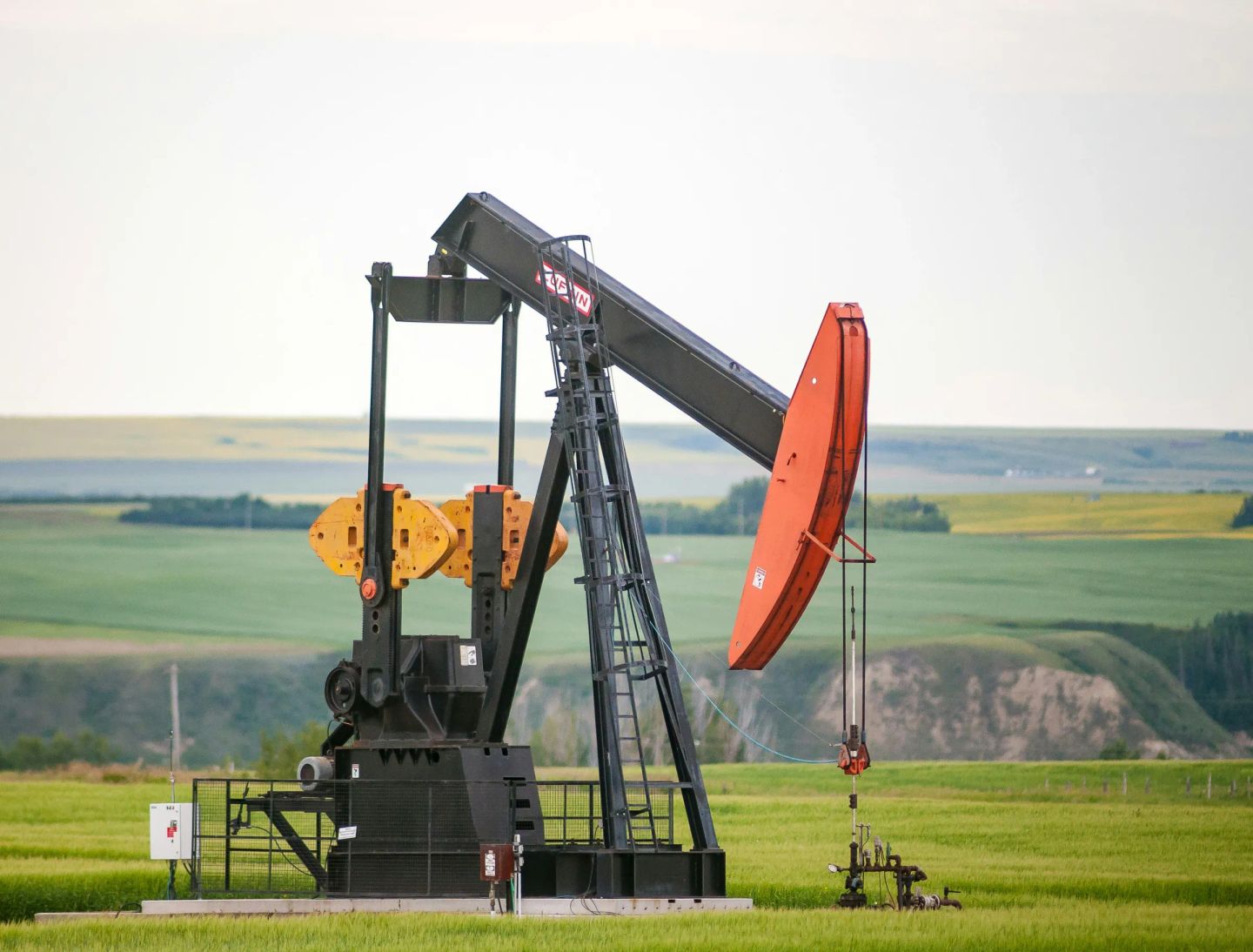
Small independent oil producers are racing into Venezuela ahead of Big Oil. Small independent oil producers, not the majors, are the ones scrambling for Venezuelan acreage as the sector reopens, according to Bloomberg. Treasury Secretary Scott Bessent has said the independents have Washington's phones “ringing off the hook,” while large companies with corporate boards move slowly. Venezuelan crude output has climbed to nearly 1.2 million barrels a day, roughly double the 2021 lows, giving early movers a producing base to build on. The small independent oil producers are betting that speed and risk tolerance will let them lock in fields before the majors finish their due diligence. Infrastructure that has gone years without maintenance remains the biggest obstacle to raising production quickly. Bloomberg
Economy
Multilateral lenders and Caracas assemble the rest of the reconstruction money. Beyond Washington's bilateral aid, multilateral lenders and Venezuela's own government are putting together reconstruction financing. CAF, the Development Bank of Latin America, created a Fund for Recovery and Reconstruction of Venezuela and estimates the total rebuilding bill at more than $15 billion. Venezuela has redirected $200 million of its International Monetary Fund special drawing rights, frozen since 2021, into a reconstruction fund at its development bank BANDES. The United Nations released $15 million from its emergency fund and is seeking $632 million for a humanitarian response plan. Taken together, it is the first large flow of foreign capital into the country in years. Guacamaya
Politics
Machado's push to return after the earthquakes splits the Trump administration. Opposition leader María Corina Machado's repeated attempts to return to Venezuela after the June 24 earthquakes have angered senior Trump administration officials, one of whom called the effort “grotesque political opportunism.” The friction is partly internal: several officials suspect Deputy Secretary of State Chris Landau of going off-script and being too sympathetic to Machado's plans, which Washington fears could destabilize the transition it is managing. The administration elevated Delcy Rodríguez, Maduro's former vice president, to lead the country, a choice deeply unpopular with Machado's supporters. President Trump has kept his distance from the internal fight, saying he did not tell Machado to stay away. The episode is the clearest sign yet of the gap between Washington's stability-first approach and the opposition it once championed. Axios
About Interstice Digital
The Interstice Digital Venezuela Protocol is a cross-border payment compliance infrastructure system purpose-built for the Venezuela corridor, that works by routing US dollar payments from the United States to Venezuela using USDC or USDT stablecoins, through a process nearly as simple as an international bank wire. Interstice Digital is a U.S.-based digital asset infrastructure company building compliant payment and settlement solutions for institutional participants.
For more information, visit intersticedigital.io.
Disclaimer
The Venezuela-America Weekly News Roundup is an aggregation of publicly available news, commentary, and third-party reporting. All items should be independently verified before being relied upon for business, legal, investment, or compliance decisions. Nothing in this newsletter represents the views, opinions, or positions of Interstice Digital or its affiliates. Interstice Digital is not a bank, broker-dealer, investment adviser, or payment network. This newsletter does not constitute legal, financial, regulatory, or investment advice. Links to third-party sources are provided for informational purposes only; Interstice Digital has no responsibility for the accuracy or completeness of third-party content.